 Free Shipping
 2-Year Warranty
 30-Day Money Back Guarantee


Does an Air Purifier Help with Dust or Just Move It Around?

Dust is one of the most common indoor pollutants, yet it is also one of the most misunderstood. Many homeowners wonder whether an air purifier actually helps with dust or if it simply stirs it up and redistributes it throughout the room. Understanding how dust behaves in the air and how filtration works makes it easier to see what an air purifier can and cannot do.
This article breaks down dust suspension, airflow patterns and filtration behavior so you can decide whether an air purifier is a useful tool for managing dust in your home.

What is Household Dust Made Of?
Dust is not a single substance. It is a mix of particles that vary in size, weight and origin. Common components include:
- Skin cells and fabric fibers
- Pet dander
- Pollen tracked indoors
- Soil and fine debris
- Microscopic airborne pollutants
Some dust particles are large and settle quickly on surfaces. Others are extremely fine and can remain suspended in the air for long periods, especially when disturbed by movement, airflow, or HVAC systems.
Why Dust Seems to Keep Coming Back
Dust settles due to gravity, but normal household activity constantly reintroduces it into the air. Walking, sitting on furniture, opening doors and even running ceiling fans can lift settled dust back into suspension.
Because of this cycle, dust is not a one-time cleanup issue. It is continuously entering, settling, and resuspending indoors.
This leads many people to ask whether an air purifier helps with dust or simply keeps it moving.
How Air Purifiers Interact with Dust
Air purifiers work by pulling air through filters or purification chambers and then releasing that air back into the room. What happens to dust depends on particle size and purifier design.
Heavier dust particles tend to settle quickly and are less likely to be captured unless they are disturbed and pulled into the purifier’s airflow.
Smaller dust particles can remain airborne for extended periods and are more easily captured by high-efficiency filtration systems.
This means an air purifier does not simply push dust around. When properly designed, it actively pulls suspended dust out of the air and traps it inside the system.
Dust Suspension Versus Dust Removal
A common misconception is that air movement always makes dust worse. In reality, controlled airflow is necessary for dust removal.
An air purifier creates a consistent airflow pattern that draws airborne particles toward the unit. Once inside, filtration media captures dust instead of allowing it to resettle elsewhere.
If airflow were absent, fine dust would remain suspended longer or eventually settle across surfaces throughout the space.
So, when people ask whether an air purifier helps with dust, the answer depends on whether the purifier is designed to capture particles rather than simply circulate air.
Why Some Air Purifiers Appear to Move Dust
Not all air purifiers are created equal. Units with weak airflow, poor filter sealing, or undersized capacity may struggle to capture dust effectively.
In these cases, air movement may resuspend settled dust without removing enough of it, giving the impression that dust levels are increasing.
This is why purifier placement, room size compatibility, and filtration technology all matter.
Can an Air Purifier Help with Dust Long Term?
An air purifier is not a replacement for regular cleaning, but it can significantly reduce airborne dust between cleanings.
- Less dust settling on surfaces
- Slower dust buildup on furniture and floors
- Reduced recirculation through HVAC systems
When paired with vacuuming and surface cleaning, an air purifier helps break the continuous dust cycle rather than just redistributing it.
Filtration Versus Surface Cleaning
Surface cleaning removes dust that has already settled. Air purification targets dust before it lands.
Using both together is the most effective strategy. Without air purification, cleaned surfaces can quickly accumulate dust again. Without cleaning, settled dust can continually be kicked back into the air.

How Puraclenz Core Air Purification Systems Address Dust
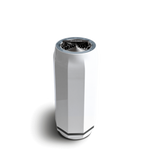
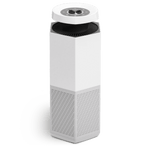
Puraclenz Core air purification systems are engineered to address airborne dust through continuous air processing rather than simple air movement. Instead of relying on basic circulation, Core focuses on actively treating indoor air as it passes through the system.
By consistently drawing in room air and processing it through advanced purification technologies, Core systems target fine, suspended dust particles that remain airborne for extended periods. This approach allows Core to reduce airborne dust before it has a chance to settle on floors, furniture, and other surfaces.
Because Core systems are designed for ongoing operation and whole-space coverage, they help manage dust levels over time rather than offering short-term relief. The result is a noticeable reduction in dust circulation within the space instead of repeated redistribution.
So, Does an Air Purifier Help with Dust?
An air purifier does not magically make dust disappear, but it also does not simply move it around when designed correctly.
Systems like Puraclenz Core demonstrate that effective air purification can help with dust by capturing airborne particles before they settle. When properly sized and strategically placed, Core supports lower dust accumulation over time and works alongside routine cleaning to manage dust more effectively throughout the home.
Recommended products

Core Air & Surface Purifier + HEPA
$649.99
Recommended articles

